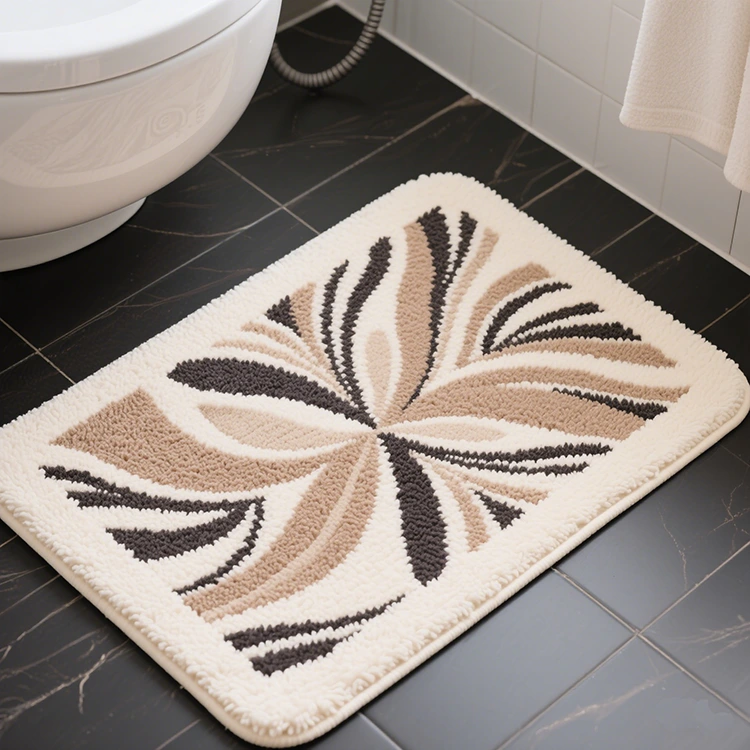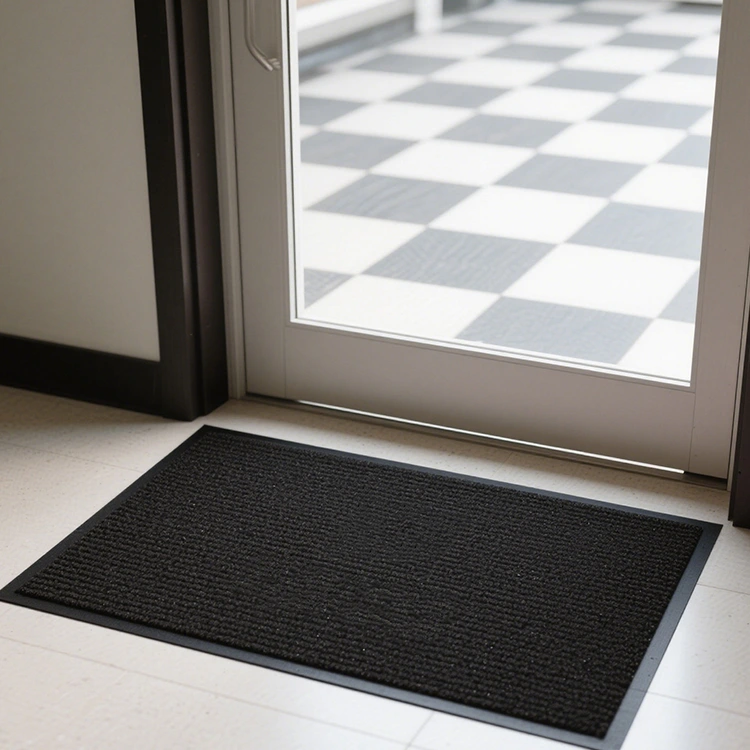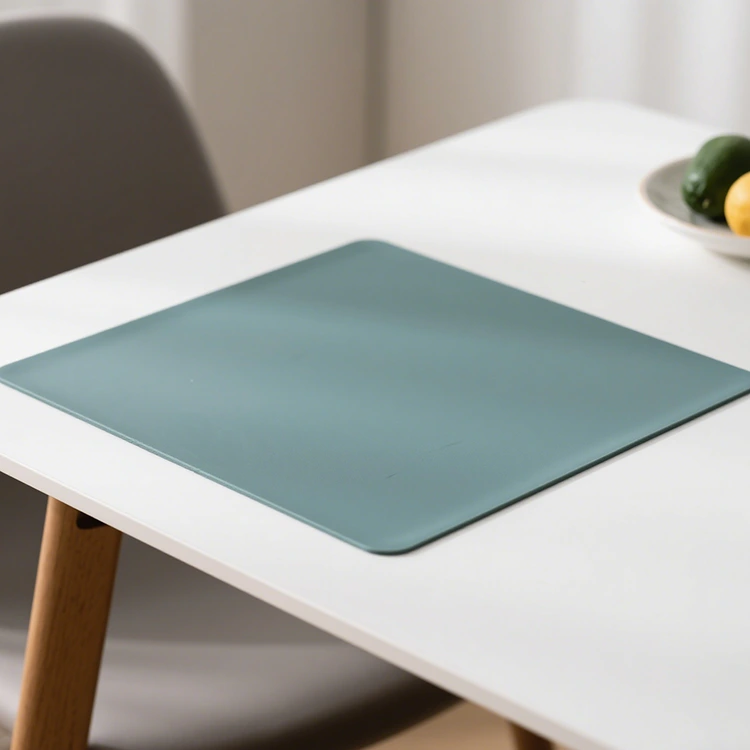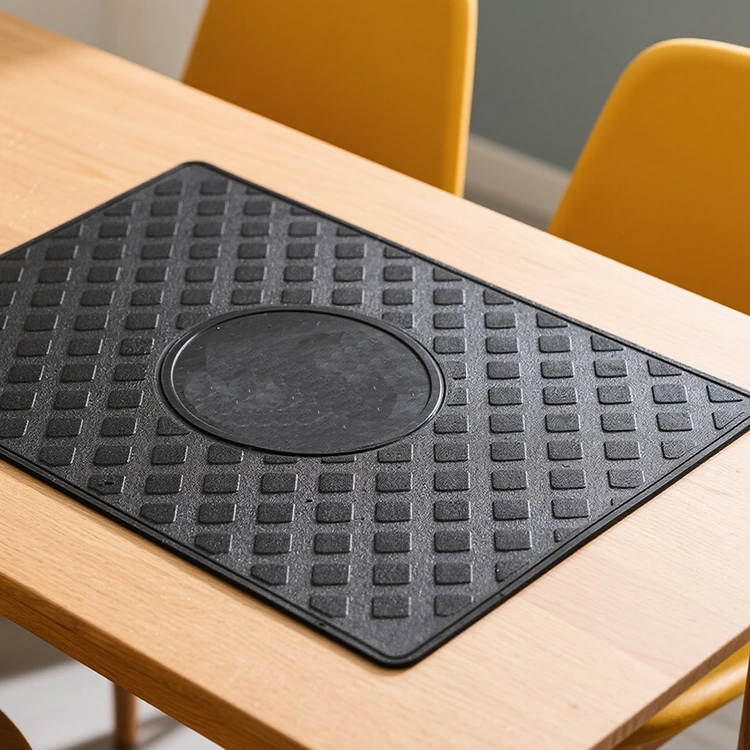

A bathroom floor mat is easy to overlook, but its size can determine how much water reaches the floor after a shower or bath. When the mat covers only a small area directly in front of the tub or shower, water can quickly spread beyond its edges, leaving wet patches that require constant wiping.
The problem is not always poor absorbency. In many cases, the mat is simply too small for the actual movement of water and people in the bathroom.
A highly absorbent mat cannot solve a coverage problem. If water lands outside the mat, the material has no opportunity to absorb it.
This becomes especially noticeable around showers with open entrances, bathtubs with high splash zones, and bathrooms where users step several feet away from the shower before drying themselves.
A small mat may absorb the water that reaches it efficiently while leaving surrounding floor areas completely exposed.
The useful question is therefore not only how much water a mat can absorb, but how much of the wet area it actually covers.
Water does not always remain directly below the showerhead. It can travel through several paths:
If the mat is positioned only under the user's feet, these additional wet areas may remain uncovered.
A small bathroom mat can create a misleading sense of protection. The area immediately in front of the shower may look dry while water collects a few inches beyond the mat.
Repeated exposure can make the floor harder to maintain. On smooth surfaces, standing water may also increase the chance of slipping, particularly when someone steps out of a shower with wet feet.
The issue becomes more obvious in households with several people. One person's shower may leave enough moisture on the floor to affect the next person, especially when the mat has limited surface coverage.
A larger mat does not automatically solve every moisture problem, but adequate dimensions give the material more opportunity to intercept water before it reaches uncovered flooring.
There is no single correct size for every bathroom. The appropriate dimensions depend on the location of the shower, bathtub, sink, door, and available floor area.
For a shower positioned against a wall, the mat should normally extend across the main exit area rather than covering only the center point where a person stands.
For a bathtub, the required width may be greater because users can exit from different positions. A narrow mat placed at one end may leave part of the tub edge uncovered.
| Bathroom Area | Main Water Risk | Size Consideration |
|---|---|---|
| Shower entrance | Wet feet and splash | Cover the primary exit path |
| Bathtub side | Water dripping from the body and tub edge | Match the usable length of the tub |
| Double sink area | Water from handwashing | Consider a longer mat across both standing positions |
| Narrow bathroom | Limited floor space | Prioritize the wettest walking area |
| Large bathroom | Water dispersed across several zones | Multiple mats may work better than one small mat |
Measurements should be taken from the actual bathroom rather than selected solely according to standard product sizes.
Absorbency and coverage work together.
Suppose a mat absorbs water quickly but has only half the surface area required for the shower exit. Water landing outside that area still reaches the floor. Increasing the mat's dimensions can therefore improve practical water control even if the absorption characteristics remain unchanged.
However, making a mat excessively large can create other problems. It may interfere with doors, cabinets, toilets, or walking paths. A mat that bunches up against furniture can become difficult to clean and may create a tripping point.
The goal is not simply to choose the largest possible mat. The goal is to choose a size that corresponds to the bathroom's actual wet zones.
A common assumption is that a thicker mat will always provide better floor protection. Thickness can affect cushioning, water-holding capacity, and drying behavior, but it cannot compensate for insufficient surface area.
If water lands 20 centimeters outside the edge of the mat, adding thickness does nothing to protect that section of flooring.
This distinction is important when comparing bathroom floor mats. Dimensions should be considered alongside material, construction, absorbency, drying characteristics, and underside performance.
A practical evaluation can include:
A properly sized mat can reduce the amount of water that needs to be wiped from the floor manually. This does not eliminate cleaning, but it can make routine bathroom maintenance more manageable.
Coverage is particularly important in bathrooms with frequently used showers. When the mat consistently catches water from the same area, the surrounding floor is less likely to remain wet after every use.
At the same time, a larger mat holds more moisture and therefore needs sufficient drying between uses. This means size should be considered together with ventilation, washing frequency, and material construction.
A large mat placed in a poorly ventilated bathroom may stay damp longer than a smaller one. In that situation, simply increasing dimensions may not improve the overall result.
Water control is only one part of bathroom mat performance. The mat itself must remain in place while people step onto it.
A rubber or rubber-like backing can help keep the mat stable on suitable floor surfaces. However, the actual grip depends on the backing material, floor finish, moisture conditions, and cleanliness.
A dirty or wet underside can reduce contact with the floor. Therefore, regular cleaning of both the upper surface and underside is part of maintaining stable performance.
The backing should also be compatible with the intended floor. Some materials may behave differently on ceramic tile, vinyl, stone, or textured flooring.
Not necessarily.
A single long mat can work well along a bathtub or double-sink area, while two smaller mats may be easier to wash, move, and dry.
The layout of the bathroom should determine the configuration.
For example, if a shower and sink are separated by several feet, placing one oversized mat across the entire room may interfere with movement. Two mats positioned around the main wet zones may provide better coverage with less obstruction.
This is also useful in compact bathrooms where every centimeter of floor space matters.
The market for bathroom accessories has gradually moved away from treating mats as simple decorative items. Dimensions, material construction, water management, cleaning requirements, and floor compatibility are increasingly considered together.
For manufacturers and product developers, this shift means that a bathroom mat needs to be evaluated according to how it functions in a real space.
Ningbo Xici Technology Co., Ltd., whose product range includes Floor Mat and Table Mat products, operates within this broader category of functional household and daily-use accessories. Its manufacturing background covers household appliances as well as newer product categories, with production supported by its parent company, Cixi Meibang Electric Appliance Co., Ltd.
The company's experience across different household scenarios provides a useful example of why product dimensions and construction need to correspond to actual use conditions rather than relying only on appearance or standardized sizing.
There is a practical way to evaluate an existing bathroom mat without replacing it immediately.
After a normal shower, observe where the water reaches the floor. Check the area directly outside the mat, the sides of the shower entrance, and the path taken when stepping out.
If the same uncovered areas become wet repeatedly, the problem may be coverage rather than absorbency.
Also observe how quickly the mat becomes saturated. If most of the mat is soaked while surrounding areas remain wet, increasing coverage may be more useful than simply selecting a thicker version.
If the mat itself stays damp for long periods, however, material and drying characteristics deserve equal attention.
A bathroom floor mat should be selected according to the actual movement of water, not just the location of the shower or bathtub.
Too small a mat leaves wet areas exposed. Too large a mat can interfere with doors and fixtures or take longer to dry. The practical choice lies between these extremes: enough coverage to intercept common splash and drip zones, while leaving sufficient space for movement and maintenance.
For everyday bathroom use, dimensions, absorbency, backing stability, drying speed, cleaning requirements, and floor compatibility should be considered as one system. A well-sized Floor Mat from Ningbo Xici Technology Co., Ltd. fits into this broader approach, where the purpose of the product is determined by the real conditions of the bathroom rather than by size alone.