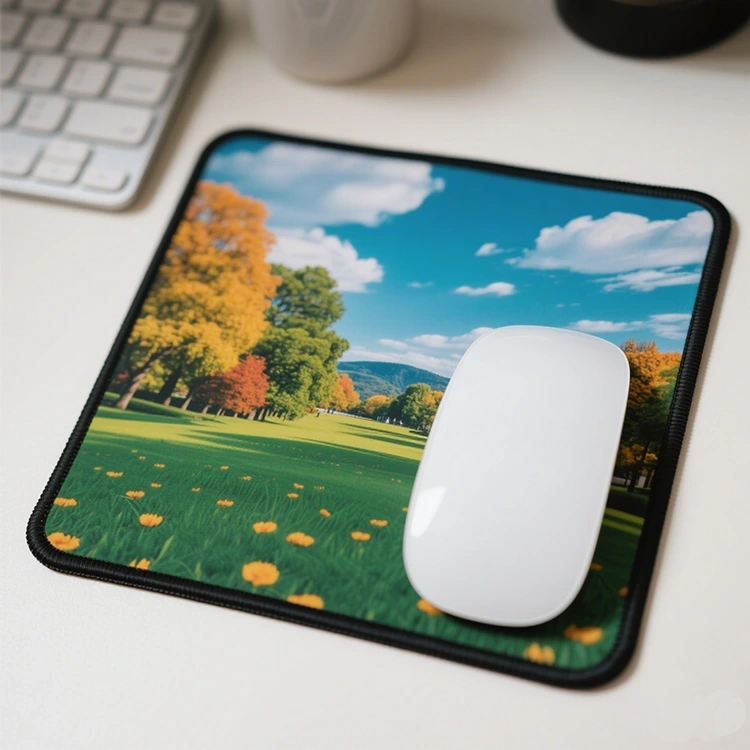
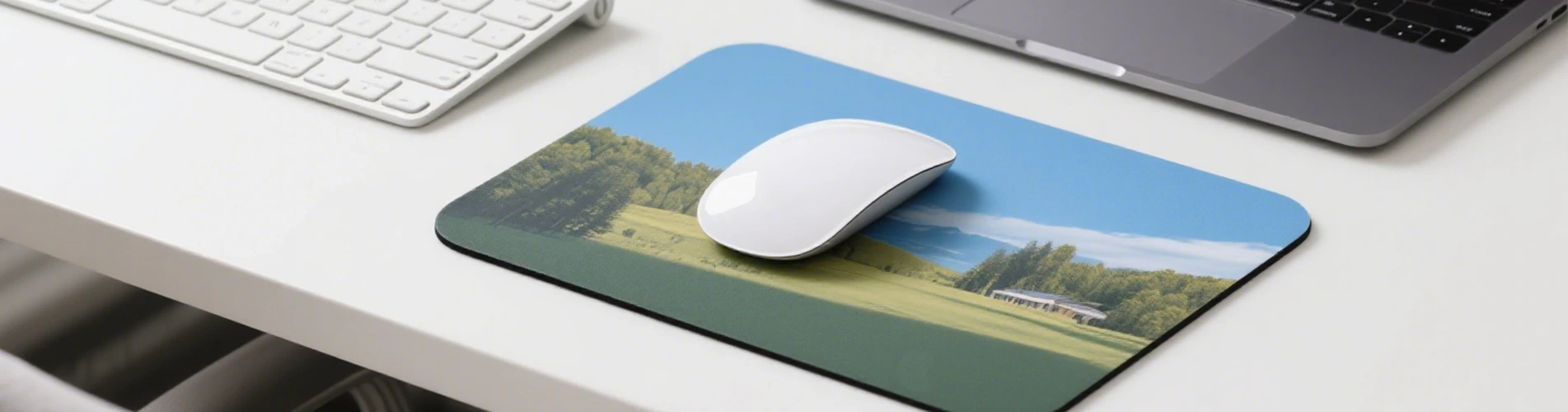
Ningbo Xici Technology Co., Ltd. observes growing curiosity around the Printed Rubber Mouse Pad and one recurring question in workspace accessories: why the rubber base underneath is almost always black or dark colored, shaping both appearance and performance expectations in daily use.
Across office desks, gaming setups, and creative studios, the underside of a Mouse Pad is rarely a design accident. It reflects material behavior, manufacturing consistency, and long-term usability considerations that are often invisible at first glance but crucial in real-world application.
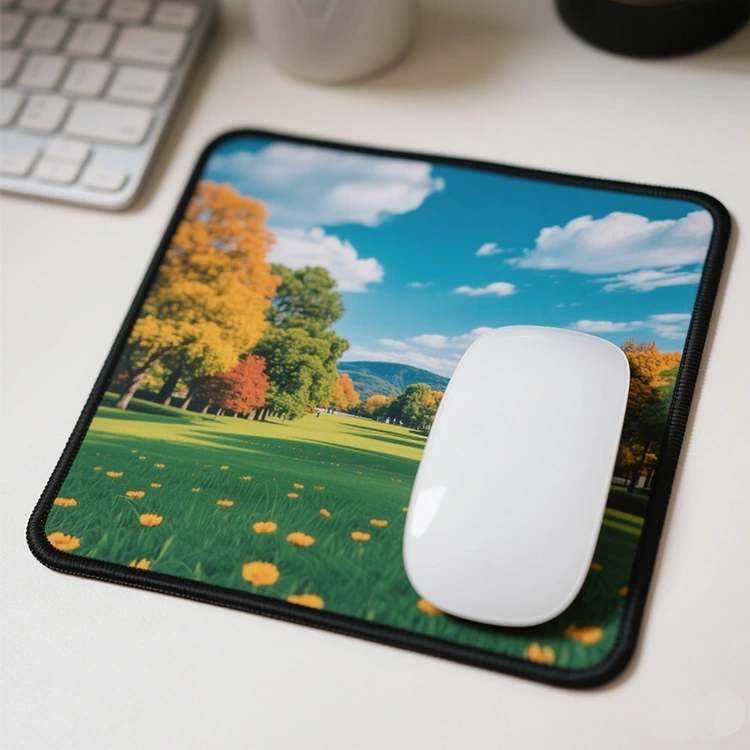
Rubber as a foundational layer is chosen primarily for stability, friction control, and surface grip. During processing, natural and synthetic rubber compounds are typically blended with carbon-based stabilizers. These additives naturally deepen the base color, resulting in a consistent black or dark gray tone.
In functional desk accessories, uniformity is more than visual preference—it is a signal of material consistency. Light-colored rubber is more prone to visible oxidation, uneven curing marks, and discoloration over time. Dark bases help mask these variations, ensuring a stable appearance across long usage cycles.
Rubber sheets undergo high-temperature vulcanization. Under these conditions, pigments and stabilizers react differently depending on composition. Dark tones are structurally more predictable, reducing the likelihood of visible patchiness or surface irregularities.
The upper printed layer and the rubber base serve two completely different purposes. The top layer is designed for visual expression, while the bottom layer focuses on grip and durability. This dual-layer structure explains why contrast between the two is intentionally maintained.
A Printed Rubber Mouse Pad often relies on high-definition surface printing, which benefits from a neutral, non-reflective base. A dark underside prevents light interference and keeps attention on the printed surface rather than the structural layer beneath.
From a usability perspective, darker bases also help reduce visible wear signs such as dust accumulation or surface friction marks. In environments where accessories are used continuously, this contributes to a more consistent visual impression over time.
To better understand the rationale, it helps to break down key functional drivers:
| Factor | Role in Design | Impact on Usage |
| Material Composition | Carbon additives in rubber | Naturally darker base tone |
| Manufacturing Stability | Vulcanization process control | More uniform surface appearance |
| Wear Resistance | Dust and friction concealment | Longer visual consistency |
| Surface Contrast | Separation from printed layer | Improved visual clarity |
| Cost Efficiency in Processing | Reduced need for pigment balancing | Streamlined production cycles |
Each of these factors contributes to why dark-colored rubber bases dominate the category, especially in products designed for daily, high-frequency interaction.
The upper printed layer of a Printed Rubber Mouse Pad depends heavily on adhesion quality and color accuracy. A stable base layer indirectly supports this by minimizing deformation and maintaining flatness.
Printed surfaces require a neutral foundation to ensure accurate color rendering. Dark rubber beneath does not interfere with pigment absorption on the top layer, allowing designs—whether geometric, photographic, or brand-related—to remain visually sharp.
Repeated pressure from wrist movement and device usage can cause micro-shifts in layered materials. A dense dark rubber base helps distribute force evenly, reducing localized deformation and supporting a smoother surface feel over time.
In large-scale production environments, consistency across batches is a major concern. Dark rubber bases simplify quality control because surface inconsistencies are less visually pronounced compared to lighter materials.
The following observations are commonly noted:
- Slight curing variations are less visible in dark tones
- Dust and environmental marks blend more naturally
- Edge finishing appears cleaner against darker backgrounds
- Long-term storage conditions have reduced visual impact
These practical advantages often outweigh purely aesthetic alternatives.
While lighter rubber bases exist, they introduce additional challenges:
- Higher sensitivity to staining and discoloration
- More visible inconsistencies in curing cycles
- Increased need for pigment stabilization
- Greater visual distraction from printed artwork
As a result, most design frameworks for desk accessories continue to favor darker foundations for reliability and predictability.
A Mouse Pad is not only a visual product but also a tactile interface. The balance between grip, flexibility, and surface smoothness depends on how the two layers interact.
The dark rubber base acts as a stabilizing foundation, allowing the top printed surface to carry creative expression without compromising physical performance. This separation of roles is one of the key reasons the design has remained consistent across global usage contexts.
Across multiple categories of desk and workstation accessories, the principle remains similar: structural layers prioritize function, while surface layers prioritize appearance. This division explains why hidden components often appear standardized, even when external designs vary widely.
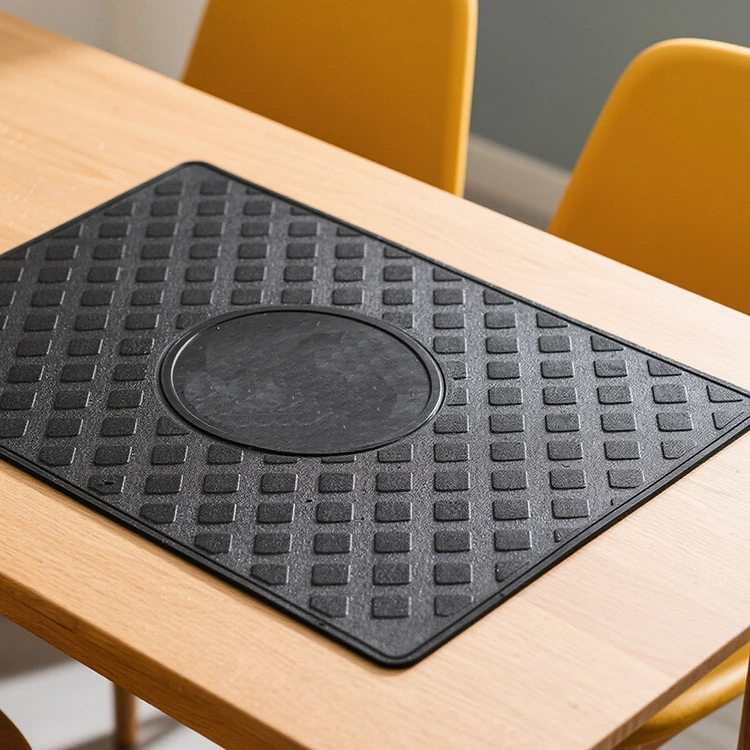
In this context, Ningbo Xici Technology Co., Ltd. integrates production experience from multiple product categories, applying controlled material selection and layered structuring methods to ensure consistency in everyday-use items such as mouse pads, mats, and related desktop surfaces.
The widespread use of dark-colored rubber bases in a Mouse Pad is not driven by style alone, but by a combination of material behavior, production stability, and long-term usability requirements. From curing processes to visual consistency, the dark base quietly supports both function and design expression.
Ningbo Xici Technology Co., Ltd. continues to refine these layered material applications across its Printed Rubber Mouse Pad line, aligning structural reliability with everyday practical needs in modern workspace environments.